

Quality Control in Contract Manufacturing: How Standards, Testing, and Compliance Ensure Reliability
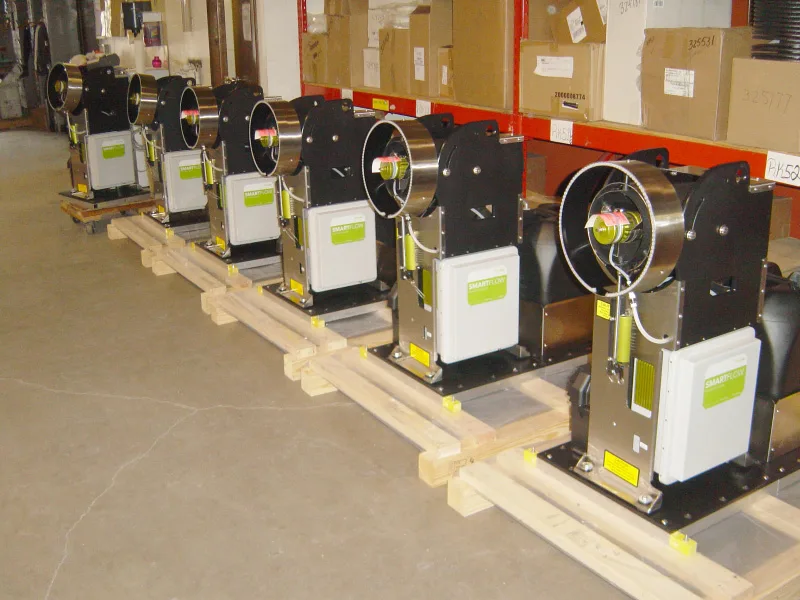
Low-Volume Contract Manufacturing: Flexible, Scalable Production for Specialized Projects

When scaling production capabilities, manufacturers face a critical decision: Should they supply their own materials and pay for processing services, or hand off the entire production process to an external partner? This choice between toll manufacturing and contract manufacturing significantly impacts operational costs, quality control, supply chain flexibility, and intellectual property protection. For design engineers, operations leaders, and procurement managers evaluating outsourcing strategies, understanding these distinctions is essential for aligning production models with business objectives.
General Assembly & Manufacturing Corp. specializes in flexible contract manufacturing solutions for industrial and electromechanical assemblies, offering the expertise to help companies navigate these production models and scale efficiently.
What Is Toll Manufacturing?
Toll manufacturing–also called toll processing–is an arrangement where a client supplies raw materials, components, or formulations to a manufacturer who provides the facilities, equipment, labor, and technical expertise needed to transform those materials into finished products.
In a tolling agreement, the toll manufacturer charges a processing fee while the client retains ownership of materials throughout production. This model offers capital efficiency, direct material control, production scalability, and enhanced IP protection.
Toll processing is particularly common in specialty chemicals, pharmaceutical compounding, electronics assembly, and medical device manufacturing, where material specifications are highly controlled or proprietary formulations require protection.
What Is Contract Manufacturing?
Contract manufacturing is a turnkey outsourcing model where the manufacturer handles the entire production process, from raw material procurement and component sourcing through fabrication, assembly, testing, and logistics.
The contract manufacturer assumes responsibility for sourcing materials, production planning, quality control, regulatory compliance, and fulfillment logistics. This comprehensive approach delivers reduced time-to-market, access to established supplier networks, economies of scale, and specialized manufacturing expertise without building internal capabilities.
Contract manufacturing is widely used across electronics, consumer goods, automotive components, and industrial equipment sectors, where companies need reliable, scalable production without managing complex supply chains.
Key Differences Between Toll and Contract Manufacturing
Understanding how these models differ across operational dimensions helps companies select the right approach:
|
Factor |
Toll Manufacturing |
Contract Manufacturing |
| Raw Material Responsibility | Client sources and supplies all materials | The manufacturer procures all materials |
| Production Control | Client controls inputs; manufacturer controls process | Manufacturer controls end-to-end production |
| Cost Structure | Processing fee only; client bears material costs | All-inclusive pricing covering materials and labor |
| Risk Allocation | Client assumes material quality and availability risks | The manufacturer assumes supply chain and procurement risks |
| IP Exposure | Lower exposure; client controls proprietary materials | Higher exposure; manufacturer accesses full specifications |
| Ideal Use Cases | Proprietary formulations, strict material requirements | High-volume production, rapid scaling needs |
The fundamental distinction: Toll manufacturing provides control over inputs with the client managing material sourcing, while contract manufacturing offers convenience through complete production outsourcing.
Advantages and Disadvantages of Toll Manufacturing
Advantages
Material and IP control: Direct oversight of raw material specifications protects proprietary formulations and trade secrets, critical for companies with unique blends or sensitive intellectual property.
Lower variable costs: When companies have efficient material sourcing capabilities or favorable supplier relationships, toll manufacturing can reduce per-unit costs by eliminating manufacturer markup on materials.
Predictable cost structure: The toll fee model provides clear, fixed processing costs independent of material price fluctuations.
Access to specialized capabilities: Companies gain access to advanced manufacturing equipment and technical expertise without capital investment.
Disadvantages
Logistics complexity: Managing material delivery schedules and inventory coordination between multiple suppliers increases operational overhead.
Higher coordination requirements: Success depends on precise communication between material suppliers, internal teams, and the toll manufacturer.
Limited scalability: Rapid volume increases require the client to scale material procurement simultaneously, which can strain supplier relationships and working capital.
Material availability dependence: Production schedules are vulnerable to supply chain disruptions or material quality issues from upstream suppliers.
Advantages and Disadvantages of Contract Manufacturing
Advantages
Turnkey production: Manufacturers handle everything from sourcing through delivery, dramatically reducing internal management burden and freeing resources for core business activities.
Faster time-to-market: Established supplier networks and production processes enable rapid scaling without lengthy setup periods.
Economies of scale: Contract manufacturers leverage purchasing power across multiple clients to negotiate better material pricing and optimize production efficiency.
Flexible scaling: Companies can quickly adjust production volumes to match demand fluctuations without managing complex procurement changes.
Disadvantages
Reduced material control: Limited visibility into component sourcing and material specifications can impact product consistency or quality standards.
Quality oversight challenges: Delegating production requires robust quality management systems, regular audits, and clear communication protocols.
IP confidentiality concerns: Sharing complete product specifications and assembly processes with external partners increases intellectual property exposure.
Price sensitivity: Final costs fluctuate with material market conditions, potentially impacting margins during commodity price volatility.
Cost Considerations: Which Model Is More Economical?
The cost-effectiveness of each model depends on several factors beyond simple per-unit pricing.
Toll manufacturing costs include the processing fee plus all material procurement, freight, inventory carrying costs, and supply chain management overhead. This model proves economical when your company has established supplier relationships, material specifications require specialized sourcing, or production volumes don’t justify economies of scale.
Contract manufacturing costs bundle all expenses-materials, labor, overhead-into a single price. This approach typically delivers better economics when high production volumes enable bulk purchasing, material costs are stable, or speed-to-market provides competitive advantages.
The calculus also considers hidden costs. Toll manufacturing requires investment in procurement staff and supply chain systems. Contract manufacturing trades control for convenience but may expose you to material cost increases.
For precision assembly and electromechanical manufacturing, General Assembly & Manufacturing Corp. works with clients to model the total cost of ownership across different engagement models.
Quality Control and Compliance Responsibilities
Quality management and regulatory compliance responsibilities differ significantly between models.
In toll manufacturing, the client ensures incoming material quality meets requirements while the toll manufacturer maintains process control and production quality standards. This division requires clear documentation of quality agreements and inspection protocols.
In contract manufacturing, the manufacturer assumes end-to-end quality responsibility, from incoming material inspection through final product testing and certification. The contract manufacturer must maintain appropriate quality management systems (ISO 9001, AS9100, ISO 13485) and regulatory compliance.
Successful partnerships require regular quality audits, documented standard operating procedures, clear specifications, traceability systems, and corrective action protocols for non-conformances.
When to Choose Toll Manufacturing
Toll manufacturing makes strategic sense when:
Proprietary formulation protection: Your competitive advantage relies on unique material blends or specifications that must remain confidential.
Established supply chains: You’ve invested in supplier relationships and developed specialized material sourcing expertise.
Strict material requirements: Industries with exacting material specifications or traceability requirements (aerospace, medical, defense) often require direct material control.
In-house quality expertise: Your quality management teams can effectively oversee material specifications and supplier qualification.
When to Choose Contract Manufacturing
Contract manufacturing proves advantageous when:
Rapid scaling is critical: Companies facing sudden demand increases or seasonal volume fluctuations need the flexibility that contract manufacturers provide.
Limited procurement infrastructure: Startups or organizations lacking sophisticated supply chain capabilities benefit from leveraging manufacturer expertise.
Focus on core competencies: Internal resources are better allocated to product development, sales, or customer service rather than production management.
Quality system requirements: Companies lacking certifications or quality infrastructure can partner with certified manufacturers meeting industry-specific compliance standards.
How to Transition Between Toll and Contract Manufacturing
Many companies transition between models as their business evolves.
Starting with toll manufacturing makes sense during product development when protecting IP is critical, and volumes are low. As the product matures and demand grows, transitioning to contract manufacturing can improve economics and reduce operational complexity.
Hybrid approaches allow phased transitions. A company might supply critical proprietary components while the manufacturer sources commodity materials. Over time, responsibility shifts to the manufacturer.
Evaluating transition readiness requires assessing production volume stability, material cost trends, internal resource availability, IP protection requirements, and manufacturer capabilities.
General Assembly & Manufacturing Corp. works with clients across multiple industries to structure flexible engagement models that evolve as business needs change.
Common Industries Using Toll and Contract Manufacturing
Chemical and coatings manufacturers frequently use toll processing for specialty formulations requiring precise material control and regulatory compliance.
Pharmaceutical and medical device companies often start with toll manufacturing to protect proprietary formulations and maintain strict material traceability.
Food and beverage manufacturers use toll processing for proprietary recipes and private label products, while leveraging contract manufacturing for co-packing and production scaling.
Electronics and industrial equipment manufacturers predominantly use contract manufacturing to access specialized assembly capabilities, testing infrastructure, and supply chain expertise.
General Assembly & Manufacturing Corp. specializes in industrial equipment, electromechanical assemblies, and precision manufacturing. Our case studies demonstrate successful partnerships across diverse manufacturing challenges.
Frequently Asked Questions
What’s the biggest difference between toll and contract manufacturing?
Material responsibility. In toll manufacturing, you supply raw materials and pay only for processing services. In contract manufacturing, the manufacturer sources materials and handles complete production.
Which model offers better cost control?
Toll manufacturing provides more direct cost control since you manage material procurement. Contract manufacturing simplifies budgeting through all-inclusive pricing but exposes you to material cost fluctuations.
How does IP protection work in toll manufacturing?
You maintain ownership and control of proprietary materials and specifications throughout production. The toll manufacturer processes materials according to your instructions without accessing complete formulation details.
Can companies use both models simultaneously?
Yes. Many manufacturers use toll processing for proprietary components while contract manufacturing commodity items or high-volume products.
Which model is better for startups vs. established OEMs?
Startups with limited capital typically benefit from contract manufacturing’s turnkey approach. Established OEMs with mature supply chains often prefer toll manufacturing for strategic products.
Partner with General Assembly & Manufacturing Corp. for Scalable Contract Manufacturing Solutions
General Assembly & Manufacturing Corp. offers flexible engagement models tailored to your operational requirements-from full turnkey contract manufacturing to build-to-print assembly programs and custom production solutions.
Our expertise spans electromechanical assembly, precision machining, supply chain management, quality systems, and engineering support. With proven capabilities across industrial equipment, control systems, and automation components, we help companies scale production efficiently while maintaining quality standards.
Contact our manufacturing experts to discuss which production model aligns with your business goals and explore how General Assembly & Manufacturing Corp. can become your strategic manufacturing partner.



13 Comments
I will right away grab your rss as I can not find your email subscription hyperlink or e-newsletter service. Do you have any? Kindly allow me know so that I could subscribe. Thanks.
Ahaa, its good discussion concerning this post here at this weblog, I have read all that, so now me also commenting at this place.
I am sure this article has touched all the internet visitors, its really really nice article on building up new blog.
I am sure this post has touched all the internet people, its really really good post on building up new web site.
Ahaa, its good discussion on the topic of this article at this place at this blog, I have read all that, so at this time me also commenting here.
These are actually fantastic ideas in on the topic of blogging. You have touched some fastidious things here. Any way keep up wrinting.
I will right away snatch your rss feed as I can’t in finding your email subscription link or e-newsletter service. Do you have any? Please allow me know in order that I could subscribe. Thanks.
I am sure this piece of writing has touched all the internet visitors, its really really good piece of writing on building up new web site.
Hey there! I’ve been reading your weblog for a long time now and finally got the bravery to go ahead and give you a shout out from Austin Texas! Just wanted to mention keep up the good job!
Incredible! This blog looks just like my old one! It’s on a totally different topic but it has pretty much the same layout and design. Wonderful choice of colors!
Whoa! This blog looks just like my old one! It’s on a entirely different subject but it has pretty much the same layout and design. Outstanding choice of colors!
I am truly thankful to the owner of this web page who has
shared this great paragraph at at this time.
Thank you for the good writeup. It in fact was a amusement account it.
Look advanced to more added agreeable from you! However, how could we communicate?