
Toll Manufacturing vs. Contract Manufacturing: Key Differences and How to Choose the Right Model
Domestic Contract Manufacturing: Reliable, U.S.-Based Production for Quality and Supply Chain Resilience
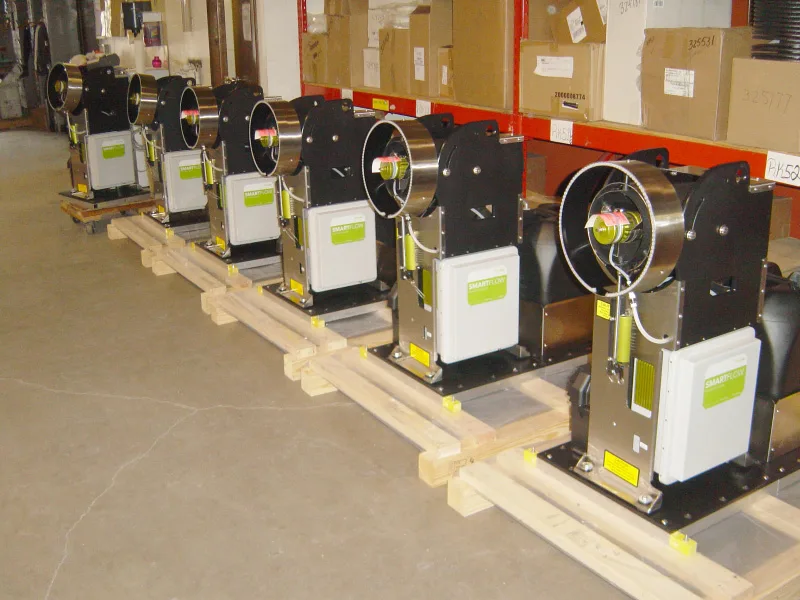
Low-volume contract manufacturing occupies a critical space in the production landscape— often bridging the gap between prototyping and mass production or supporting niche end markets with world-class production capabilities for smaller-scale applications. For OEMs, startups, and product innovators, it provides a practical pathway to bring specialized products to market without the financial burden and risk of large-scale manufacturing commitments. Whether you’re launching a new product, testing market demand, or producing customized solutions for niche applications, low-volume production offers the flexibility and precision needed to move forward confidently.
At General Assembly & Manufacturing Corp., we understand that low-volume manufacturing demands the same engineering rigor and quality standards as high-volume runs, just with greater adaptability. Our approach combines precision fabrication, electromechanical assembly expertise, and collaborative engineering support to deliver production-ready builds that scale with your business needs.
What Is Low-Volume Contract Manufacturing?
Low-volume manufacturing refers to production runs that typically range from a handful of units to several thousand, depending on the product complexity and industry context. Unlike prototype development, which focuses on proving concept and design viability, low-volume manufacturing produces functional, market-ready units intended for actual use—whether for customer validation, early market entry, or specialized applications.
In some instances, this production approach serves a distinct purpose: it allows companies to test real-world market response, validate manufacturing processes, and refine designs based on actual production data before committing to expensive tooling and mass production infrastructure. While prototypes might use substitute materials or simplified assembly methods, low-volume builds use production-intent materials and processes that closely mirror what full-scale manufacturing would require.
The concept of “bridge manufacturing” describes this transitional role perfectly. Low-volume production creates a bridge between development and full-scale manufacturing, allowing teams to identify and resolve process issues, supplier challenges, and design optimization opportunities in a controlled, lower-risk environment. This staged approach significantly reduces the likelihood of costly mistakes when scaling to higher volumes.
When Low-Volume Manufacturing Makes Sense
Several scenarios make low-volume contract manufacturing the optimal choice for bringing products to market or sustaining existing product lines.
New product introduction (NPI) represents one of the most common applications. When launching an innovative product, manufacturers need to validate design assumptions, test manufacturing processes, and gather real customer feedback before investing in high-volume tooling. Low-volume pilot production enables this validation phase while generating actual sales revenue and building market awareness.
Early market validation requires real products in customers’ hands. Rather than relying solely on market research and focus groups, companies can produce limited quantities for beta testing programs, early adopter sales, or trade show demonstrations. The feedback gathered during this phase often proves invaluable for refining both product design and go-to-market strategy.
Custom or high-mix, low-volume products represent another ideal application. In industrial equipment, medical devices, and specialized electronics, many products serve specific customer needs or niche markets where annual demand might only reach hundreds or a few thousand units. These applications don’t justify the investment in high-volume manufacturing infrastructure but still require production-quality parts and assemblies.
Replacement parts and legacy product support increasingly rely on low-volume manufacturing capabilities. When companies need to supply service parts for products no longer in active production, low-volume manufacturing provides a cost-effective alternative to maintaining excess inventory or rebuilding full production lines.
Supply chain disruptions have also highlighted the value of flexible, low-volume production capability. When traditional suppliers face capacity constraints or extended lead times, having access to domestic low-volume manufacturing partners enables companies to maintain product availability during critical periods.
Advantages of Low-Volume Contract Manufacturing
1. Design Flexibility
Low-volume production environments accommodate design iteration in ways that high-volume manufacturing cannot match. When tooling investments remain relatively modest, engineering teams can incorporate improvements and refinements between production runs based on testing results, customer feedback, or component availability changes. This iterative approach leads to better final products and often reveals optimization opportunities that wouldn’t emerge until post-launch in traditional development cycles.
The lower tooling costs associated with low-volume methods make frequent updates economically feasible. Rather than locking in designs prematurely to justify expensive molds or fixtures, teams can refine and perfect products while still generating revenue from early production units.
2. Faster Time-to-Market
Reduced setup time compared to mass production significantly accelerates product launch timelines. Low-volume manufacturing processes typically require less lead time for tooling, simpler production line configuration, and shorter validation cycles. This speed advantage proves particularly valuable in fast-moving markets where being first to market creates a competitive advantage.
Many low-volume manufacturers can run prototyping and production activities in parallel, further compressing development timelines. Design validation can occur simultaneously with initial production planning, ensuring that when designs are finalized, manufacturing ramps quickly.
3. Lower Risk and Investment
Avoiding large upfront tooling costs and volume commitments reduces financial exposure during the critical early stages of product commercialization. Instead of investing hundreds of thousands of dollars in production tooling before validating market demand, companies can scale their manufacturing investment in proportion to proven market traction.
This staged investment approach allows businesses to test demand before scaling, minimizing the risk of overbuilding inventory or committing to production capacity that exceeds actual market needs. The capital preserved can be redirected to marketing, sales development, or product enhancement activities that drive growth.
4. Supply Chain Agility
Local or in-house production through low-volume contract manufacturing reduces dependency on extended global supply chains and their associated lead times. When working with domestic partners who maintain diverse capabilities, companies gain greater control over production timing and can respond more quickly to changing market conditions.
Easier inventory control for niche or short-run products becomes possible when production runs can be scheduled based on actual demand rather than minimum order quantities dictated by overseas manufacturers. This demand-responsive approach reduces working capital tied up in inventory while improving cash flow management.
5. Customization and Niche Market Access
Low-volume manufacturing excels at adapting products for small customer segments or specialized regulatory markets. Medical device manufacturers, for example, often need to produce region-specific configurations that comply with different regulatory standards. Industrial equipment suppliers frequently customize solutions for specific customer applications or industry segments. These customization needs align perfectly with the flexibility that low-volume production provides.
Processes and Technologies Used in Low-Volume Manufacturing
Additive Manufacturing (3D Printing)
Additive manufacturing has revolutionized low-volume production by enabling small batches of complex geometries without any tooling investment. Advanced industrial 3D printing technologies now produce end-use parts in engineering-grade materials, making them suitable for functional production applications rather than just prototyping.
By eliminating tooling requirements, additive manufacturing dramatically shortens lead times and enables design complexity that would be prohibitively expensive with traditional methods. For components requiring intricate internal structures, lattice designs, or organic geometries, 3D printing often represents the only practical manufacturing approach for low volumes.
CNC Machining and Fabrication
For applications requiring tight tolerances and high-precision components in metals and plastics, CNC machining remains the backbone of low-volume production. Computer-controlled mills, lathes, and routers produce consistent, accurate parts from production-intent materials, ensuring that low-volume builds meet the same specifications as eventual high-volume production.
These processes prove particularly valuable for mechanical assemblies, enclosures, and structural components where dimensional accuracy and surface finish directly impact product performance. The combination of precision and material versatility makes CNC fabrication essential for most electromechanical products.
Rapid Tooling
Rapid tooling techniques create low-cost molds and dies suitable for small production runs, enabling manufacturers to produce parts in production materials without the investment required for hardened steel tooling. These approaches include aluminum tooling, 3D-printed molds, and other accelerated tooling methods that balance cost, lead time, and part quality.
This capability enables real-material testing before committing to high-volume tooling, ensuring that material properties, process parameters, and part quality meet requirements before making larger investments. Many companies use rapid tooling to produce several hundred or even several thousand units while validating demand and refining designs.
Assembly and Integration
Manual or semi-automated assembly lines optimized for flexibility handle the integration work required for electromechanical products, electronics assemblies, and complex multi-component systems. These production environments accommodate the frequent changeovers and small batch sizes that characterize low-volume manufacturing while maintaining quality standards through documented work instructions and inspection protocols.
Combining electromechanical assembly, wire harness fabrication, and enclosure builds within a single facility streamlines production and improves communication between assembly teams and engineering staff. This integrated approach proves especially valuable during the design refinement phase common in low-volume projects.
The Bridge Between Prototype and Full Production
Bridge manufacturing describes the strategic use of low-volume production runs to validate design, materials, and manufacturing processes before committing to mass-scale investment. This intermediate phase serves multiple critical functions in the product development lifecycle.
First, it validates that designs proven in prototype form can actually be manufactured consistently using production processes and materials. Prototypes often use expedited methods or substitute materials that don’t reflect actual production realities. Bridge manufacturing exposes any gaps between prototype feasibility and production practicality.
Second, it allows manufacturers to establish and document production processes, work instructions, and quality control procedures while volumes remain manageable. This documentation becomes the foundation for scaling to higher volumes, ensuring that the institutional knowledge developed during early production transfers effectively to expanded operations.
Third, bridge manufacturing minimizes risk before mass-scale investment by revealing potential issues with component sourcing, assembly sequences, testing protocols, or quality control measures. Identifying and resolving these issues during low-volume production costs far less than discovering them after investing in high-volume tooling and automated production equipment.
The concept of pilot line testing extends this principle, using initial production runs to validate manufacturing line configuration, cycle times, and throughput before replicating the setup for higher-volume production. This validation reduces the risk of capacity shortfalls or efficiency problems when scaling operations.
Design and Engineering for Low-Volume Builds
Successful low-volume manufacturing starts with appropriate design strategies that acknowledge the unique characteristics of smaller production runs. Design for Manufacturing and Assembly (DfMA) principles apply differently in low-volume contexts compared to mass production environments.
In low-volume production, designs should prioritize modularity and flexibility over absolute optimization for automated assembly. While high-volume products might use custom components designed specifically for automated placement, low-volume builds often benefit from using more standardized parts that assemble easily with manual or semi-automated processes. This approach trades some per-unit efficiency for greater design flexibility and lower tooling costs.
Material selection takes on added importance in low-volume manufacturing. With limited purchasing power compared to high-volume programs, low-volume manufacturers must carefully balance material performance requirements against availability, minimum order quantities, and lead times. Working with contract manufacturers who maintain diverse supplier relationships and inventory helps overcome these challenges.
Tolerance optimization requires thoughtful consideration in low-volume contexts. While maintaining critical tolerances ensures proper fit and function, unnecessarily tight specifications increase costs and complexity without corresponding value. Engineering teams should collaborate closely with manufacturing partners to identify which dimensions truly drive performance and which can accommodate wider tolerances without impacting product quality.
This collaboration between OEM engineers and contract manufacturing partners proves essential for successful low-volume production. The manufacturer’s process knowledge combined with the OEM’s product expertise creates designs optimized for the specific production environment and volume level, avoiding both over-engineering and cost-ineffective simplification.
Industries That Benefit Most from Low-Volume Manufacturing
Medical device development relies heavily on low-volume manufacturing for early regulatory prototypes and limited clinical builds. The lengthy approval processes required by FDA and international regulatory bodies make low-volume production essential during clinical trials and initial market entry. Even after full approval, many medical devices serve specialized applications where annual demand remains in the hundreds or low thousands of units, making low-volume manufacturing the appropriate long-term production strategy.
Industrial equipment manufacturers frequently require custom tooling, test rigs, pilot systems, and specialized machinery produced in limited quantities. These products often feature extensive customization for specific customer applications or process requirements, making them natural fits for low-volume contract manufacturing. The ability to work closely with engineering teams throughout the build process ensures that custom requirements receive appropriate attention and validation.
Electronics manufacturing for specialized applications benefits significantly from low-volume production capabilities, particularly for small-batch PCB assemblies and custom enclosures. Many industrial control systems, instrumentation devices, and specialty computing platforms serve niche markets where volumes don’t justify offshore mass production, but quality and reliability requirements remain extremely demanding.
Automotive and aerospace industries increasingly use low-volume manufacturing for short-run parts, spare components, and legacy system support. As vehicles and aircraft remain in service for decades, the need to produce replacement parts long after original production ends creates ongoing demand for low-volume manufacturing capability. Similarly, performance vehicles, concept cars, and specialized aerospace components often require limited production runs with exacting quality standards.
Consumer product developers use low-volume manufacturing for market testing and limited edition releases. Rather than committing to full-scale production before validating market response, consumer brands can launch products in limited quantities to test pricing, positioning, and customer acceptance. Successful products then scale to higher volumes, while underperforming designs can be discontinued with minimal losses.
How to Choose the Right Low-Volume Contract Manufacturer
Selecting an appropriate low-volume manufacturing partner requires evaluating several critical factors that determine project success.
Engineering support and design collaboration capabilities distinguish exceptional partners from basic fabricators. Look for manufacturers who assign experienced engineering resources to work alongside your team, contributing manufacturing process knowledge and design optimization insights. This collaborative approach yields better designs, faster problem resolution, and smoother production ramps.
Flexibility in batch sizes and scheduling becomes particularly important in low-volume manufacturing. Partners who accommodate varying order quantities, expedited runs when needed, and collaborative scheduling make it easier to align production with actual demand and market developments. Rigid minimum order quantities or inflexible lead times undermine the agility that makes low-volume manufacturing valuable.
In-house fabrication and assembly capabilities reduce the coordination burden and communication gaps that emerge when multiple subcontractors participate in a project. Working with comprehensive service providers who handle fabrication, assembly, testing, and integration under one roof streamlines project management and improves accountability.
Quality systems and documentation compliance provide confidence that production will meet required standards. Look for certifications relevant to your industry—ISO 9001 for general manufacturing quality, AS9100 for aerospace applications, or ISO 13485 for medical devices. These certifications indicate established quality management systems and documented processes that support consistent production.
Communication, transparency, and project management practices determine how smoothly projects execute. Manufacturers who provide regular status updates, proactive issue escalation, and clear documentation create partnerships rather than transactional relationships. This transparency proves especially valuable when addressing the inevitable challenges that arise during low-volume production.
Quality, Testing, and Traceability in Low-Volume Production
Rigorous testing and quality control apply equally to low-volume production as to high-volume manufacturing, though implementation approaches may differ. The goal remains the same: ensuring that every unit meets specifications and performs as intended.
Functional testing validates that products operate correctly across their full range of operating conditions. For electromechanical assemblies, this includes mechanical operation, electrical performance, and system-level validation. Establishing comprehensive test protocols early in low-volume production ensures that quality issues surface quickly and that corrective actions prevent recurrence.
Inspection and documentation practices create the traceability needed for future scaling and continuous improvement. Even in runs of dozens or hundreds of units, documenting material lots, process parameters, inspection results, and test data builds the foundation for statistical process control when volumes increase. This data also supports root cause analysis when issues arise and helps identify trends before they impact larger production quantities.
First-article validation plays a particularly important role in low-volume manufacturing. The first production unit from a new build undergoes extensive inspection and testing to verify that all specifications, dimensions, and performance requirements are met before proceeding with the full run. This validation step catches issues early when corrections cost the least.
The benefits of traceability and data-driven quality control extend beyond immediate production. The manufacturing knowledge accumulated during low-volume builds informs future design iterations, process improvements, and scaling decisions. Companies that maintain detailed production records during low-volume phases can scale more confidently and efficiently when market demand justifies higher volumes.
Cost Factors in Low-Volume Manufacturing
Understanding the cost components specific to low-volume production helps set realistic expectations and identify optimization opportunities.
Tooling, setup, and labor represent the primary cost drivers in low-volume manufacturing. Unlike high-volume production, where tooling costs amortize across millions of units, low-volume runs spread these fixed costs over smaller quantities, resulting in higher per-unit expenses. However, the lower absolute tooling costs mean reduced upfront investment and financial risk.
Labor content per unit typically runs higher in low-volume production due to less automation and more manual processes. This labor intensity creates opportunities for domestic manufacturing to compete effectively, as shorter lead times, better communication, and reduced logistics costs offset wage rate differences.
Material selection and sourcing strategies significantly impact low-volume production costs. Minimum order quantities for specialty materials can force purchases of excess inventory, while long lead times for custom components extend project timelines. Manufacturers with established supplier networks and strategic inventory management help mitigate these challenges.
Engineering changes and iterations occur more frequently in low-volume production as designs evolve based on testing results and customer feedback. Building flexibility into cost structures and maintaining collaborative engineering relationships helps manage these changes efficiently without excessive change order costs.
Strategies for cost efficiency in low-volume manufacturing include modular designs that use standard components wherever possible, reducing custom fabrication requirements. Rapid tooling approaches balance part quality with tooling investment, enabling production in real materials without committing to expensive hardened tooling prematurely.
In-house production that combines multiple processes under one roof reduces the markup and coordination costs associated with multiple subcontractors. Parallel prototyping and production runs compress timelines, allowing products to reach market faster and begin generating revenue that offsets development costs.
Common Challenges and How to Overcome Them
Low-volume contract manufacturing presents distinct challenges that require proactive management and strategic planning.
Supply chain constraints affect low-volume manufacturers disproportionately since their purchasing volumes don’t prioritize them with major component suppliers. Overcoming this challenge requires working with domestic manufacturing partners who maintain established supplier relationships and can leverage their aggregate purchasing power across multiple customers. Flexible sourcing strategies that identify alternative components early in the design process also help maintain production continuity when primary suppliers face constraints.
Process consistency presents challenges when production runs are intermittent, and volumes don’t justify extensive automation. Maintaining consistent quality requires standardized work instructions, documented processes, and trained personnel, even for small runs. Manufacturers who treat low-volume production with the same process discipline as high-volume operations deliver more predictable results.
Cost management requires balancing quality requirements with budget constraints while avoiding over-engineering or cost-cutting that compromises product performance. Leveraging modular tooling, shared resources across multiple products, and realistic tolerance specifications helps control costs without sacrificing quality. Transparent communication about cost drivers and trade-offs enables better decision-making throughout the project.
Communication gaps between OEM engineering teams and manufacturing partners can derail projects when expectations misalign or technical requirements lack clarity. Overcoming this challenge demands real-time engineering collaboration, frequent progress reviews, and documented specifications that both parties understand and accept. Manufacturers who assign dedicated project management and engineering resources to each program minimize communication-related issues.
Frequently Asked Questions
What defines “low volume” in manufacturing terms?
Low volume typically refers to production runs ranging from a handful of units up to several thousand, though the definition varies by industry and product complexity. Medical devices might consider anything under 1,000 units annually as low volume, while automotive components might define low volume as under 100,000 units. The key characteristic is that volumes don’t justify the tooling investment and infrastructure required for high-volume mass production.
How does it differ from prototyping or mass production?
Prototyping focuses on proving concepts and validating designs, often using expedited processes, substitute materials, or simplified construction. Low-volume manufacturing produces market-ready units using production-intent materials and processes. Mass production emphasizes optimization for high throughput and lowest per-unit cost, typically requiring significant tooling investment and automated processes. Low-volume manufacturing bridges these extremes, providing production-quality output with greater flexibility and lower fixed costs.
What industries benefit most from low-volume builds?
Medical devices, industrial equipment, specialized electronics, aerospace components, and custom consumer products represent the primary beneficiaries. Any industry requiring customization, serving niche markets, needing rapid market entry, or maintaining legacy product support benefits from low-volume manufacturing capabilities.
How do costs compare to high-volume production?
Per-unit costs run higher in low-volume manufacturing due to fixed costs spreading across fewer units and higher labor content. However, total program costs remain much lower because tooling investment is minimal and inventory requirements are reduced. For products with uncertain demand or requiring frequent design updates, low-volume manufacturing often proves more economical than committing prematurely to high-volume production infrastructure.
Can low-volume production meet strict quality standards?
Absolutely. Quality standards depend on process discipline, documentation, and validation practices rather than production volume. Many low-volume manufacturers maintain ISO 9001, AS9100, ISO 13485, and other quality certifications demonstrating their capability to meet demanding requirements. The key is working with partners who apply appropriate quality management systems regardless of order quantity.
Partner with General Assembly & Manufacturing Corp. for Low-Volume Contract Manufacturing
General Assembly & Manufacturing Corp. brings precision-driven engineering and manufacturing expertise to low- and mid-volume production projects across industrial, medical, and electronics applications. Our approach integrates design for manufacturability and assembly (DfMA) consultation with in-house fabrication, electromechanical assembly, and comprehensive testing to deliver production-ready builds that meet exacting specifications.
Our team understands that low-volume production demands the same engineering rigor as high-volume manufacturing while requiring greater flexibility and collaborative problem-solving. From initial design consultation through first-article validation and ongoing production, we work as an extension of your engineering team to optimize designs for manufacturability and assembly, identify cost reduction opportunities, and ensure quality throughout the production process.
With established quality management systems, diverse in-house capabilities, and decades of experience across multiple industries, General Assembly & Manufacturing Corp. provides the scalability and reliability your low-volume projects require. We’ve helped numerous clients successfully navigate the journey from prototype to production, building the foundation for eventual scaling when market demand justifies higher volumes.
Our commitment to quality, transparency, and collaborative engineering makes us the partner of choice for companies seeking more than just manufacturing capacity. Explore our case studies to see how we’ve helped clients across diverse industries bring innovative products to market through strategic low-volume manufacturing.
Contact us today to discuss your low-volume production needs and discover how General Assembly & Manufacturing Corp’s integrated engineering and manufacturing capabilities can accelerate your product commercialization timeline while maintaining the quality and flexibility your project demands.