
Industrial Equipment & Machinery Contract Manufacturing
In today's competitive industrial landscape, original equipment manufacturers face mounting pressure to reduce costs, accelerate time-to-market, and maintain precision standards across increasingly complex machinery builds. Industrial contract manufacturing addresses these challenges by enabling companies to outsource the design, fabrication, assembly, and testing of sophisticated equipment to specialized partners with proven capabilities.
General Assembly & Manufacturing Corp. delivers precision-driven contract manufacturing solutions for electromechanical and mechanical systems. With decades of experience serving energy, automation, and industrial equipment sectors, we provide the engineering expertise, fabrication capabilities, and quality management systems that OEMs need to scale production without capital-intensive facility investments.
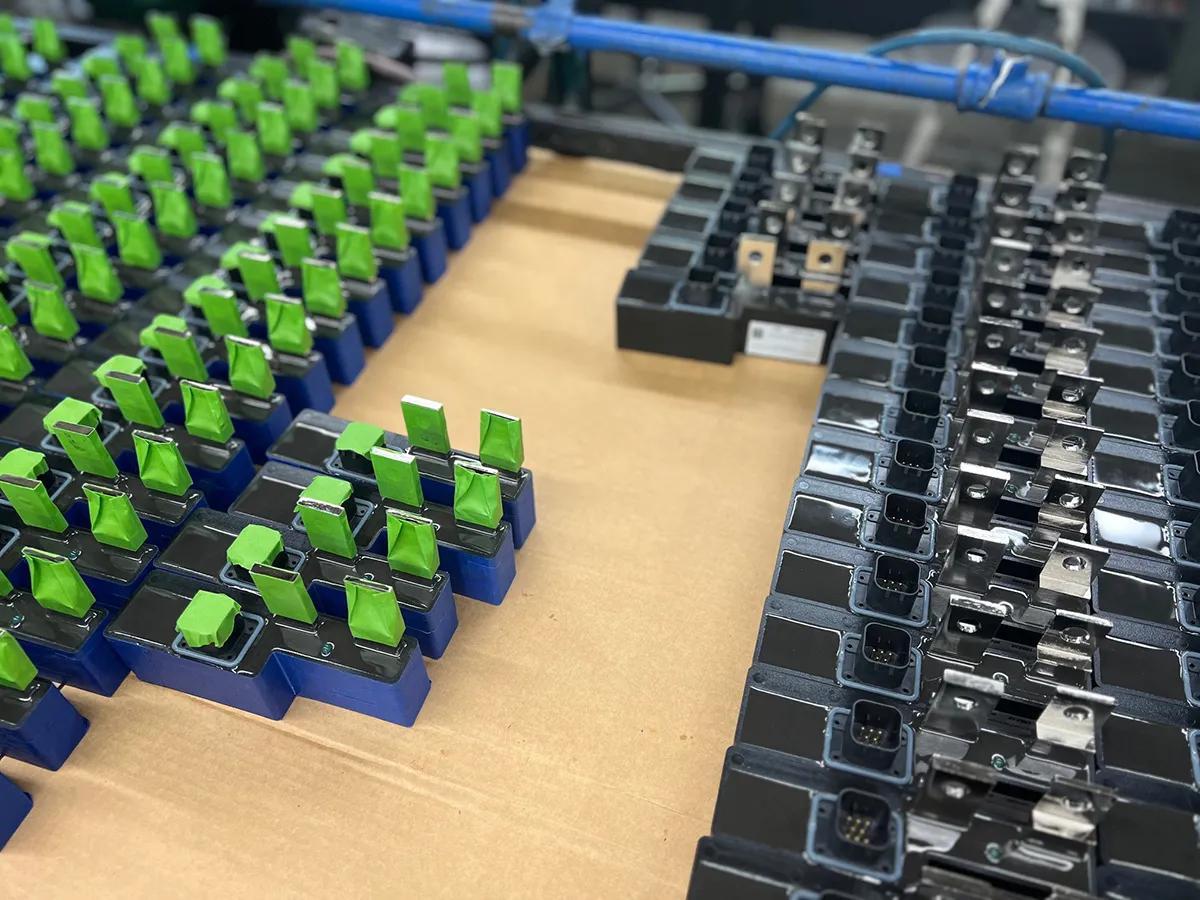
What Is Industrial Contract Manufacturing?
Industrial contract manufacturing is the outsourced production of machinery, equipment, and integrated subsystems through partnerships with specialized manufacturers who handle design for manufacturing support, component fabrication, assembly, and validation testing. Unlike general contract manufacturing, industrial builds demand higher tolerances, complex electromechanical integration, and rigorous testing protocols to ensure operational reliability in demanding applications.
This collaborative model encompasses OEM contract manufacturing, industrial assembly services, and build-to-print manufacturing - allowing companies to leverage external expertise while maintaining design control and intellectual property ownership. Contract manufacturers bring specialized equipment, certified processes, and cross-functional engineering teams that many OEMs would find cost-prohibitive to maintain internally.
The relationship typically begins with design collaboration to optimize manufacturability, extends through precision fabrication and assembly, and concludes with comprehensive testing and validation before delivery. This end-to-end approach ensures that outsourced machinery meets the same performance standards as in-house production while offering significant operational advantages.
The Role of Contract Manufacturing in the Industrial Equipment Sector
The industrial equipment sector increasingly relies on contract manufacturing to address talent shortages, capacity constraints, and the rising complexity of modern machinery. As automation systems incorporate more sensors, controls, and networked components, manufacturers need partners who understand both mechanical precision and electronic integration.
Contract manufacturers serve critical roles in producing:
- Automation systems – Robotic cells, material handling equipment, and process control systems that require precise mechanical assemblies integrated with programmable logic controllers, motor drives, and safety systems.
- Heavy-duty equipment – Large-format machinery and structural assemblies where fabrication capabilities, welding expertise, and load-bearing requirements exceed typical manufacturing tolerances.
- Control panels and electromechanical subassemblies – Industrial enclosures housing motor controls, power distribution systems, and operator interfaces that demand UL listing and compliance with electrical codes.
- Specialized test rigs and tooling – Custom equipment built to exact specifications for quality control, product validation, and manufacturing process support.
These outsourced builds support industries ranging from energy generation and transportation to semiconductor manufacturing and industrial automation. As production requirements shift and new technologies emerge, contract manufacturing provides the flexibility to scale capacity without the long-term commitments of facility expansion or equipment acquisition.
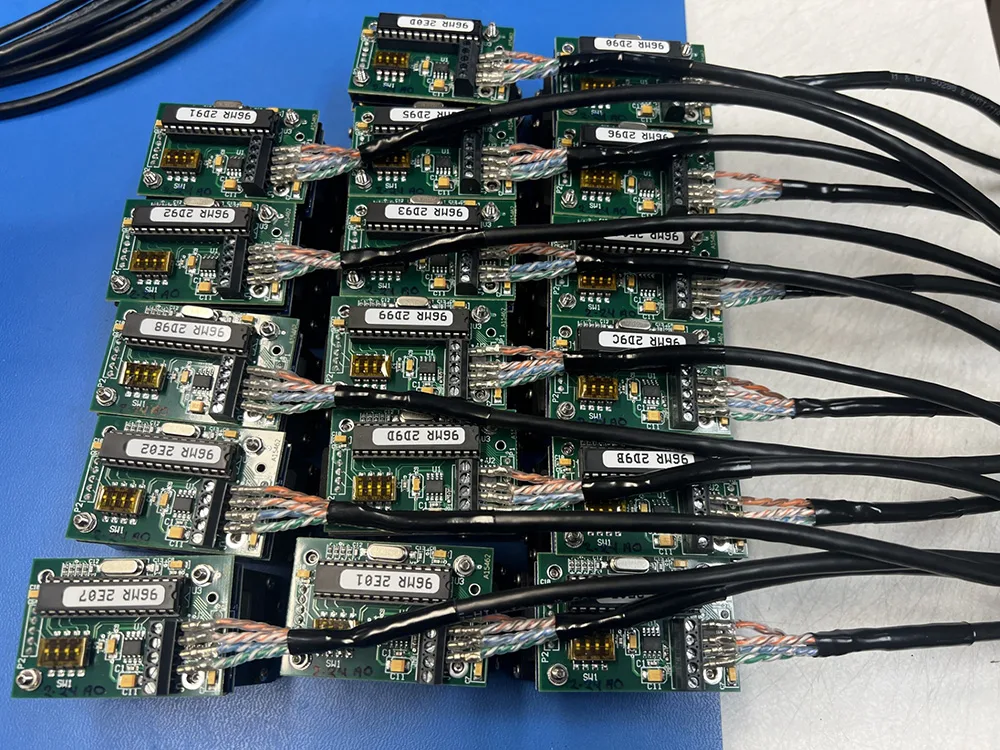
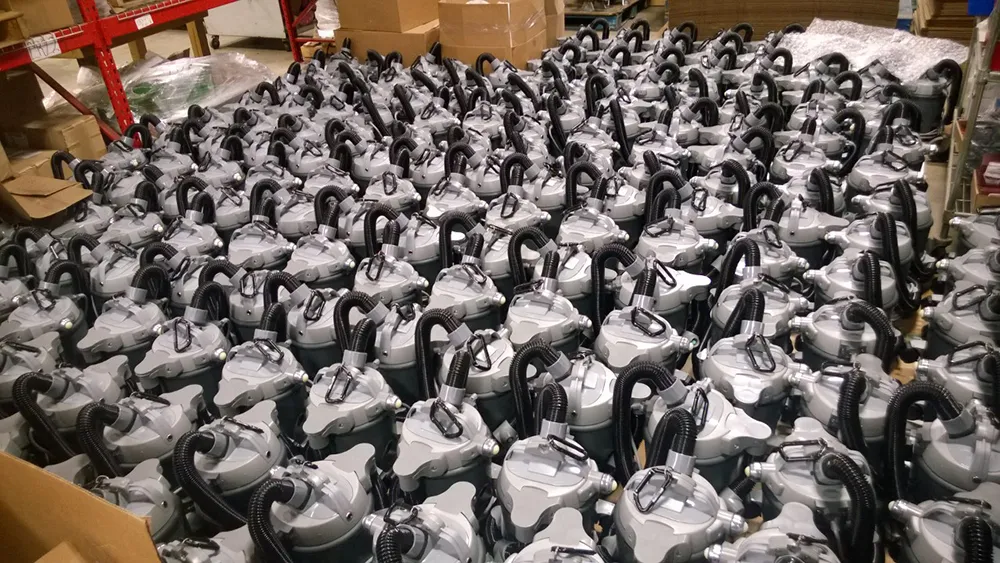
Types of Industrial Contract Manufacturing Services
1. Design and Engineering Support
Effective contract manufacturing begins with engineering collaboration that optimizes designs for manufacturability, assembly efficiency, and lifecycle reliability. Design for Manufacturing and Assembly (DfMA) services identify potential production challenges during the design phase - reducing costs, minimizing assembly time, and improving product quality.
Engineering support can include CAD modeling, finite element analysis, prototype development, and design validation testing. These services help refine concepts before full production, catching issues that could lead to costly revisions or field failures. Co-engineering relationships enable iterative improvements based on manufacturing floor feedback and real-world performance data.
2. Fabrication and Machining
3. Electromechanical Assembly
4. System Testing and Validation
5. Supply Chain and Logistics Management
Benefits of Industrial Contract Manufacturing
- Cost efficiency – Outsourcing eliminates capital investments in specialized equipment, facilities, and tooling that may only support specific projects. Variable production costs replace fixed overhead, improving financial flexibility and return on investment.
- Expertise access – Contract manufacturers bring specialized knowledge in fabrication techniques, assembly processes, and testing methodologies developed across hundreds of projects. This accumulated experience translates to fewer production issues and faster problem resolution.
- Scalability – Production capacity expands or contracts based on demand without the constraints of fixed facility capacity or permanent workforce commitments. This flexibility supports both prototype quantities and high-volume production runs.
- Quality assurance – Certified processes, calibrated equipment, and trained personnel ensure consistent quality across production batches. Third-party audits and compliance with industry standards provide objective validation of manufacturing capabilities.
- Faster time-to-market – Established processes, available capacity, and parallel workflow capabilities reduce production timelines compared to building internal capabilities. Concurrent engineering and manufacturing preparation accelerate the transition from design to delivery.
- Focus on core competencies – Companies redirect internal resources toward research and development, product innovation, and customer relationships rather than managing manufacturing operations. This strategic focus strengthens competitive differentiation in core markets.
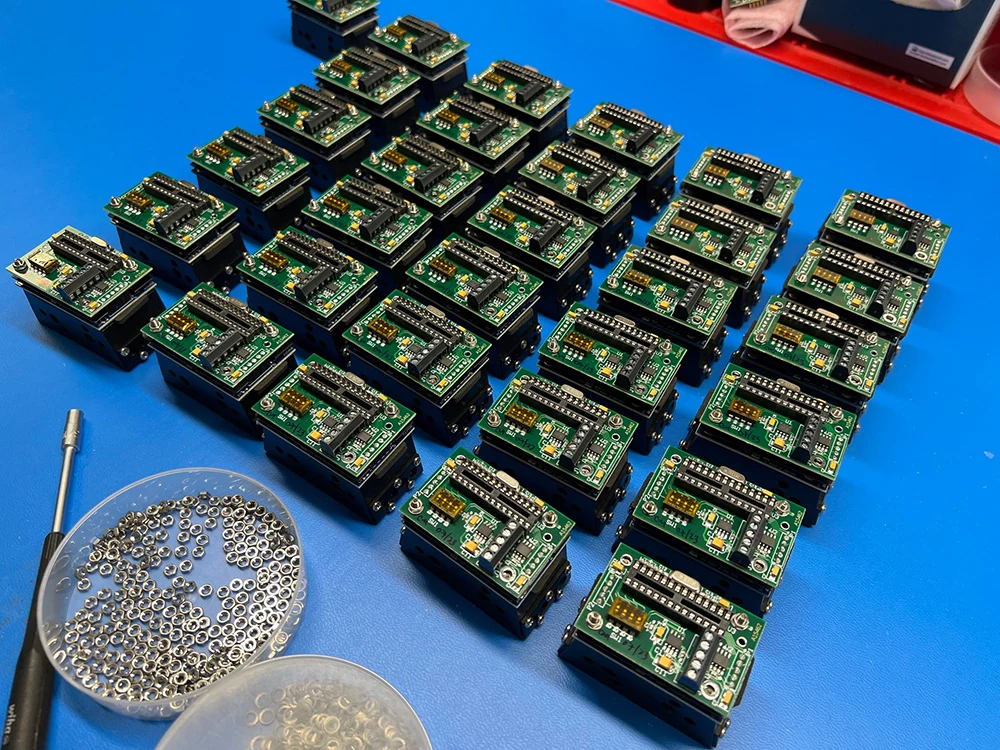
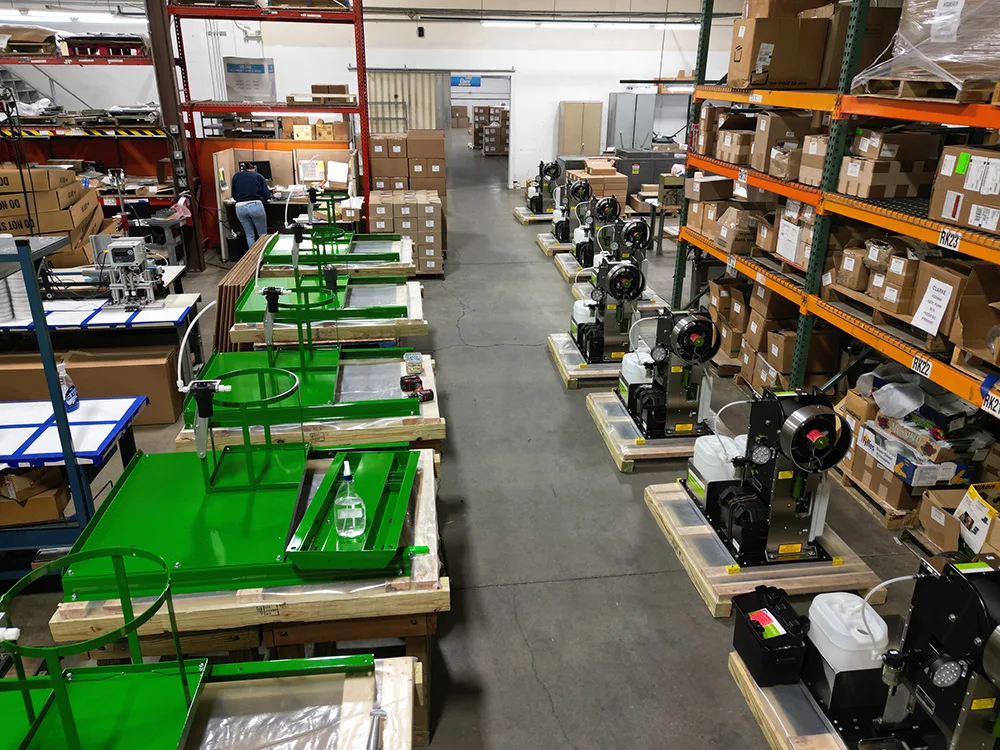
Common Applications in Industrial Equipment Manufacturing
- Industrial automation systems and robotics – Assembly cells, pick-and-place systems, and automated guided vehicles that combine mechanical precision with sophisticated motion control and sensor feedback.
- Manufacturing test and measurement equipment – Custom fixtures, automated test stands, and metrology systems built to exact specifications for quality control and process validation.
- Power generation and energy equipment – Switchgear assemblies, transformer enclosures, and renewable energy system components requiring electrical compliance and structural integrity.
- Heavy machinery and tooling systems – Presses, conveyors, and material processing equipment where fabrication quality and assembly precision directly impact operational performance.
- Semiconductor and electronics assembly – Process equipment, wafer handling systems, and cleanroom-compatible assemblies meeting stringent contamination control requirements.
- Transportation and material-handling systems – Conveyor controls, automated storage systems, and distribution center equipment integrating mechanical, electrical, and software components.
Quality Standards and Compliance in Industrial Manufacturing
Industrial Electronics Contract Manufacturing Capabilities
Challenges in Industrial Equipment Outsourcing and How to Overcome Them
- Complex integration – Industrial equipment often combines mechanical, electrical, pneumatic, and hydraulic subsystems that must work together seamlessly. Early design collaboration, 3D modeling, and system simulation identify integration challenges before fabrication begins, reducing costly revisions during assembly.
- Supply chain risk – Component availability and pricing volatility threaten production schedules and project budgets. Dual sourcing strategies, vendor-managed inventory programs, and strategic buffer stock minimize disruptions while maintaining cost control.
- Intellectual property protection – Proprietary designs and manufacturing processes require protection when working with external partners. Non-disclosure agreements, controlled facility access, and compartmentalized information sharing safeguard IP while enabling effective collaboration.
- Quality control oversight – Distance from production facilities can complicate quality monitoring and issue resolution. Data-driven quality systems, real-time reporting, and process validation protocols provide visibility without requiring constant on-site presence.
- Regulatory requirements – Industrial equipment often must comply with safety standards, electrical codes, and industry-specific regulations. Partnering with certified manufacturers who understand applicable requirements ensures compliance without extensive customer oversight.
Comparing Industrial Contract Manufacturing vs. In-House Production
| Factor | Contract Manufacturing | In-House Production |
|---|---|---|
| Cost of Ownership | Variable costs scale with volume; no capital investment in equipment | Fixed costs for facilities, equipment, and maintenance regardless of utilization |
| Lead Time | Immediate capacity availability; faster ramp-up for new projects | Equipment acquisition and process development extend timelines |
| Scalability | Flexible capacity adjustment without facility constraints | Limited by installed equipment and facility footprint |
| Equipment Utilization | The manufacturer spreads costs across multiple customers | Underutilized equipment during low-volume periods |
| Quality Control | Certified processes and third-party audits provide objective validation | Direct oversight, but requires quality infrastructure investment |
| Expertise Access | Specialized knowledge across materials, processes, and applications | Limited to internal experience and training investments |
Selecting the Right Industrial Contract Manufacturing Partner
- Engineering and DfMA capability – Assess the depth of engineering support available for design optimization, prototype development, and manufacturability analysis. Partners who contribute to design refinement add more value than those who simply execute provided drawings.
- Certifications and industry experience – Review quality certifications, industry-specific standards compliance, and experience with similar applications. Request customer references and facility audit reports that validate claimed capabilities.
- Facility capacity and equipment range – Evaluate whether fabrication equipment, assembly floor space, and testing capabilities can handle your project requirements. Consider both current needs and potential future expansion.
- Quality management systems and audit readiness – Examine documented processes, inspection protocols, and corrective action systems. Well-structured quality programs indicate mature operations less prone to disruptions.
- Communication and project management transparency – Assess responsiveness, documentation practices, and willingness to provide production visibility. Effective partners proactively communicate status updates and potential issues before they impact schedules.
Frequently Asked Questions
Partner with General Assembly & Manufacturing Corp. for Industrial Contract Manufacturing
General Assembly & Manufacturing Corp. provides comprehensive contract manufacturing services for industrial equipment and machinery requiring precision fabrication, electromechanical assembly, and rigorous testing. Our engineering team collaborates on design for manufacturing optimization, while our certified capabilities deliver consistent quality across prototype development through production quantities.
We serve diverse industries with proven experience in chemical spraying and dispersion equipment, power distribution equipment, and specialized industrial monitoring and controls. Our quality management systems ensure compliance with ISO 9001:2015 and industry-specific standards while maintaining the traceability and documentation that procurement managers require.
Review our case studies to see how we've helped OEMs reduce costs, accelerate time-to-market, and improve product reliability through strategic manufacturing partnerships.
Contact us to discuss your next industrial equipment project and discover how our contract manufacturing expertise can support your engineering and production objectives.