
Engineered Redesign & Build
What Is Design for Manufacturing and Assembly (DfMA)?
In modern manufacturing, bringing a product from concept to production requires strategic decisions about how design and fabrication responsibilities are distributed. Build-to-print manufacturing offers a proven model where companies maintain complete design ownership while partnering with specialized manufacturers to execute production with precision and efficiency.
This manufacturing approach has become increasingly valuable for organizations that need to scale production quickly, maintain strict quality standards, and convert fixed manufacturing costs into variable expenses, all while protecting their intellectual property and design control.
What Is Build-to-Print Manufacturing?
Build-to-print manufacturing is a contract manufacturing model where a client provides complete, finalized design documentation to a manufacturing partner who executes production according to exact specifications. In this relationship, the client retains full ownership of the intellectual property and engineering documentation while the manufacturer serves as a production partner responsible for fabricating components and assemblies to precise tolerances.
The term “build-to-print” refers to manufacturing from client drawings and specifications without the manufacturer making design modifications or taking on engineering responsibility. All technical documentation, usually including computer-aided design (CAD) files, bills of materials, engineering drawings, material specifications, and tolerance requirements, originates from the client. The manufacturer’s role focuses exclusively on translating these specifications into physical products with exacting accuracy and repeatability.
This model differs fundamentally from design-build or turnkey approaches, where manufacturers take on varying degrees of design responsibility. In build-to-print manufacturing, the division of duties remains clear: clients own the design, and manufacturers own the production process. This clarity makes build-to-print manufacturing particularly valuable for companies with established product designs who need reliable, scalable production capacity without surrendering design control.
How the Build-to-Print Manufacturing Process Works
- Design Handoff and Documentation. The build-to-print process begins with a comprehensive documentation transfer. Clients provide detailed engineering drawings, three-dimensional CAD files, complete bills of materials, material specifications, and tolerance requirements. This documentation must be thorough and unambiguous, as manufacturers rely on these specifications to configure tooling, establish process parameters, and verify quality standards. Full design ownership by the client means all engineering decisions have been finalized before production begins. The documentation package should address material grades, surface finishes, heat treatment requirements, inspection criteria, and any special handling or compliance requirements.
- Engineering Review and Feasibility Analysis. Once documentation is received, manufacturers conduct a thorough engineering review to verify manufacturability and production readiness. This includes analyzing tolerances for feasibility with available equipment, reviewing material specifications for availability and suitability, and identifying any potential production challenges. Design for Manufacturability and Assembly (DfMA) checks occur during this phase, though the manufacturer’s role remains consultative rather than prescriptive. If concerns arise regarding tolerances, material selection, or process capability, manufacturers communicate these findings to the client while maintaining the client’s ultimate design authority. This collaborative approach ensures production success without compromising intellectual property boundaries.
- Material Sourcing and Preparation. With designs validated for production, manufacturers initiate material procurement from qualified suppliers. This includes verifying material certifications, establishing inventory levels appropriate to production volume, and preparing materials for manufacturing operations. Supplier qualification becomes particularly important for regulated industries where material traceability and certification documentation must meet stringent standards. Manufacturers maintain relationships with certified suppliers and implement receiving inspection protocols to verify material conformance before production begins.
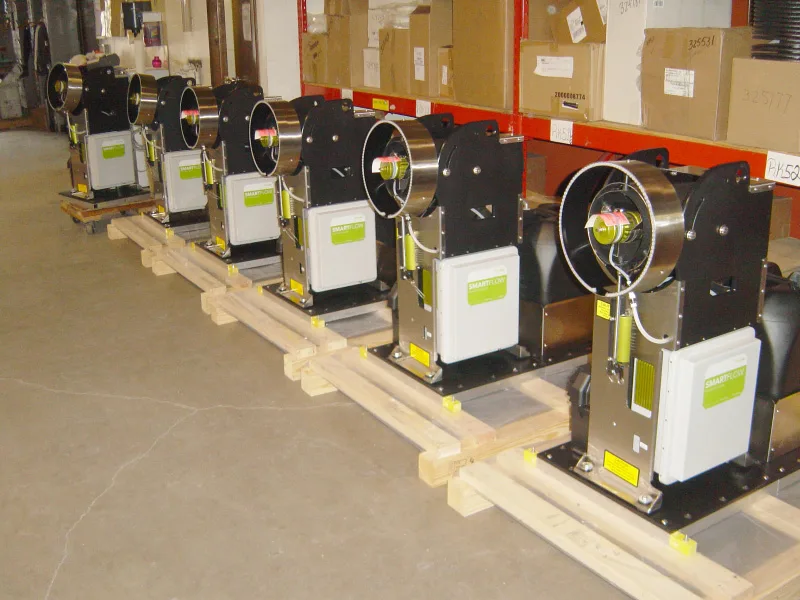
- Precision Manufacturing and Assembly. Production execution involves machining, fabrication, and sub-assembly operations performed to exact specifications. Manufacturers leverage specialized equipment, including computer numerical control (CNC) machining centers, precision fabrication tools, and controlled assembly environments, to transform raw materials into finished components and assemblies. The build-to-print model offers flexibility for low-volume prototype runs and higher volume production. General Assembly & Manufacturing Corp’s capabilities span precision machining, electromechanical assembly, and specialized fabrication processes, allowing manufacturers to adapt production approaches while maintaining specification compliance regardless of volume requirements.
- Quality Assurance and Inspection. Quality control forms the cornerstone of successful build-to-print manufacturing. Standardized testing protocols include coordinate measuring machine inspection for dimensional verification, statistical process control for ongoing monitoring, and in-process quality checks at incoming, in-process, and outgoing stages. For companies serving regulated industries, a build-to-print CM ensures quality documentation meets industry requirements. Inspection data, material certifications, and process records create comprehensive traceability that supports both quality assurance and regulatory compliance.
- Final Delivery and Documentation. Upon completion, finished products are packaged and delivered with complete documentation packages. This includes inspection reports, material certifications, process documentation, and any industry-specific compliance records. These documents provide traceability and verification that production met all specified requirements.
Advantages of Build-to-Print Manufacturing
- Cost Efficiency: Build-to-print manufacturing eliminates the capital investment required for specialized equipment, facility expansion, and dedicated workforce development. Companies convert fixed manufacturing costs into variable expenses that scale with production volume, improving financial flexibility and reducing risk.
- Specialized Expertise: Manufacturing partners provide access to advanced equipment, materials, knowledge, and process expertise that would be prohibitively expensive to develop internally. This expertise includes specialized machining capabilities, material science knowledge, and process optimization experience accumulated across diverse projects.
- Consistency and Repeatability: Professional manufacturers implement rigorous process controls that ensure consistent quality across production runs. Tight tolerance control, validated processes, and comprehensive inspection protocols deliver repeatable results that meet exacting specifications.
- Scalability: Build-to-print partnerships offer flexible capacity that accommodates everything from initial prototypes to full-scale production runs. Manufacturers maintain infrastructure and workforce capacity that can rapidly scale to meet changing demand without requiring client investment in additional resources.
- Speed to Market: Leveraging existing manufacturing infrastructure accelerates production timelines. Rather than investing months in equipment acquisition and process development, companies can begin production quickly using proven services and established capabilities.
- Regulatory Compliance: Experienced manufacturers handle quality documentation, maintain certifications, and implement processes that satisfy industry-specific regulatory requirements. This expertise proves particularly valuable in aerospace, defense, and medical device markets where compliance complexity can overwhelm organizations without specialized experience.
- Reduced Risk: Clear division of design and production responsibilities minimizes ambiguity and simplifies project management. Each party focuses on its core competencies while maintaining accountability for its specific responsibilities.
Challenges and How to Mitigate Them
- Limited Design Flexibility: Once production begins, design changes require process revalidation and can disrupt production schedules. Mitigate this challenge through upfront Design for Manufacturability & Assembly (DfMA) collaboration that identifies and resolves potential issues before production launch.
- Specification Gaps: Incomplete or ambiguous documentation creates interpretation challenges that can compromise quality. Ensure specifications are complete, unambiguous, and include all relevant details regarding materials, tolerances, finishes, and inspection requirements.
- Supplier Dependency: Reliance on a single manufacturing partner creates vulnerability to capacity constraints or quality issues. Work with qualified, certified partners who demonstrate consistent performance, and consider redundant sourcing strategies for critical components.
- Quality Variance Risk: Process variations can affect consistency across production runs. Address this through strict process audits, comprehensive quality assurance protocols, and statistical process control that identifies and corrects variations before they affect product quality.
Common Applications for Build-to-Print Services
- Aerospace and Defense: Precision assemblies, machined structural components, and electromechanical systems requiring strict tolerance control and comprehensive documentation.
- Medical Devices: Regulated components and assemblies where traceability, material certification, and process validation support FDA compliance requirements.
- Industrial Equipment: Sub-assemblies (e.g., control systems and specialized components that integrate into larger equipment platforms) as well as completed machinery, equipment, and products.
- Energy and Power Systems: Enclosures, switchgear, support structures, and components requiring robust construction and long-term reliability.
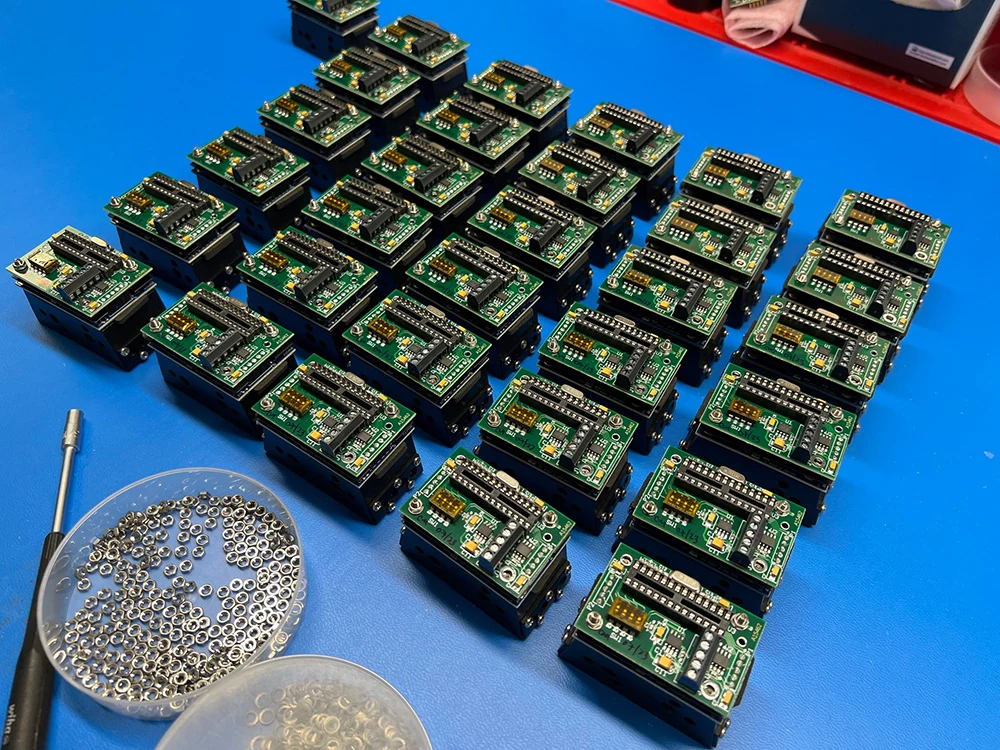
- Telecommunications and Electronics: Housings, printed circuit board assemblies, connectors, and components requiring precision fabrication and controlled assembly environments.
General Assembly & Manufacturing Corp’s experience in electromechanical assembly and precision fabrication applications positions the company to support diverse build-to-print requirements across these industries. View detailed case studies demonstrating successful project execution.
When to Choose Build-to-Print Manufacturing
Build-to-print manufacturing makes strategic sense when designs are finalized and validated, eliminating the need for ongoing engineering iteration. This approach proves ideal when design control and intellectual property protection are priorities, as clients maintain complete ownership of engineering documentation and product specifications.
Companies requiring rapid scaling benefit from build-to-print partnerships that provide immediate access to production capacity without capital investment delays. When compliance, repeatability, and comprehensive documentation are critical, particularly in regulated industries, experienced manufacturers bring established quality systems and certification that ensure requirements are met.
The model also appeals to organizations seeking to convert fixed costs associated with equipment, facilities, and specialized labor into variable manufacturing costs that align with production volume. This financial flexibility improves capital efficiency and reduces business risk.
Selecting the Right Build-to-Print Partner
- Certifications and Compliance: Verify manufacturers maintain relevant certifications, including ISO 9001, or compliance appropriate to your industry requirements.
- Vertical Integration: Manufacturers offering machining, assembly, testing, and packaging under one roof streamline communication, reduce logistics complexity, and improve accountability.
- Technical Capabilities: Assess precision tolerances, advanced material experience, cleanroom assembly capabilities, and specialized process expertise relevant to your product requirements.
- Quality Systems: Evaluate statistical process control implementation, inspection data reporting capabilities, and traceability systems that support both quality assurance and regulatory compliance.
- Communication and Documentation: Clear project management, responsive feedback channels, and comprehensive documentation practices ensure smooth collaboration throughout the production lifecycle.
- Engineering Support: Select partners who can provide Design for Manufacturability feedback and process optimization recommendations while respecting design ownership boundaries.
Build-to-Print Manufacturing vs. Turnkey Contract Manufacturing
Build-to-print manufacturing occupies a specific position within the broader contract manufacturing spectrum. Understanding how it compares to turnkey approaches helps companies select the appropriate model for their situation.
Companies often progress from build-to-print to turnkey manufacturing as product portfolios mature and internal engineering resources become constrained. Both models serve valuable purposes depending on organizational capabilities and strategic priorities.
Frequently Asked Questions
What industries commonly use build-to-print manufacturing?
Aerospace, defense, medical devices, industrial equipment, energy systems, and telecommunications rely heavily on build-to-print manufacturing for components requiring precise specifications and regulatory compliance.
How detailed must specifications be?
Documentation should be comprehensive enough that a qualified manufacturer can execute production without making design assumptions. This includes complete CAD files, detailed drawings with tolerances, material specifications, finish requirements, and inspection criteria.
Can a build-to-print manufacturer provide DfMA feedback?
Yes, experienced manufacturers offer Design for Manufacturability and Assembly feedback that identifies potential production challenges while maintaining client design authority. This consultative approach improves production success without compromising IP ownership.
How does IP protection work in build-to-print partnerships?
Clients retain complete intellectual property ownership. Confidentiality agreements and established protocols ensure design documentation remains protected throughout the manufacturing relationship.
What certifications should a qualified partner have?
Required certifications depend on your industry. Common certifications include ISO 9001 for quality management, AS9100 for aerospace, ITAR registration for defense applications, and FDA compliance for medical devices.
Is build-to-print more cost-effective than in-house production?
For many companies, build-to-print manufacturing reduces total cost by eliminating capital equipment investment, facility expenses, and specialized workforce development while providing access to advanced capabilities and flexible capacity.
Partner with General Assembly & Manufacturing Corp. for Precision Build-to-Print Manufacturing
General Assembly & Manufacturing Corp. brings decades of experience in precision machining, electromechanical assembly, and compliant manufacturing to build-to-print partnerships. Our commitment to quality, combined with comprehensive technical capabilities and established certifications, ensures your designs are executed with accuracy and consistency.
Whether you’re scaling production of an established product, seeking to reduce manufacturing costs, or requiring a partner who understands the complexities of regulated industries, General Assembly & Manufacturing Corp. delivers the expertise, capacity, and quality systems that support your success.
Contact us today to discuss your build-to-print manufacturing requirements and discover how our precision capabilities can support your production goals.

19 Comments
I aam sure thuis artticle hhas ouched alll tthe internet visitors, itss reaoly reawlly faqstidious postt oon buildkng up new blog.
I am sure this post has touched all the internet people, its really really pleasant piece of writing on building up new weblog.
Way cool! Some very valid points! I appreciate you writing this post and also the rest of the website is extremely good.
I’m not that much of a online reader to be honest but your sites really nice, keep it up! I’ll go ahead and bookmark your website to come back down the road. Many thanks
You made some decent points there. I checked on the net for more info about the issue and found most individuals will go along with your views on this site.
Hello, I wish for to subscribe for this website to take latest updates, thus where can i do it please help.
I just could not depart your website before suggesting that I extremely enjoyed the standard information a person provide in your visitors? Is gonna be again often to check up on new posts
Way cool! Some very valid points! I appreciate you penning this post plus the rest of the website is very good.
What’s up, I read your blogs regularly. Your writing style is awesome, keep up the good work!
Ahaa, its nice discussion about this piece of writing at this place at this website, I have read all that, so now me also commenting here.
With premium account it is possible for you to to have an entry to numerous features which might be locked for free members.
I will immediately snatch your rss as I can’t find your email subscription link or newsletter service. Do you’ve any? Please permit me know so that I may subscribe. Thanks.
I will right away clutch your rss as I can’t in finding your email subscription hyperlink or e-newsletter service. Do you have any? Kindly allow me understand in order that I could subscribe. Thanks.
I will right away grasp your rss as I can not find your e-mail subscription link or newsletter service. Do you’ve any? Kindly allow me understand in order that I may subscribe. Thanks.
I couldn’t rrefrain from commenting. Excsptionally welpl written!
Greetings! Very helpful advice in this particular post! It’s the little changes that produce the most significant changes. Thanks for sharing!
Heya! I’m at work surfing around your blog from my new apple iphone! Just wanted to say I love reading through your blog and look forward to all your posts! Carry on the superb work!
I like what you guys are usually up too. This kind of clever work and reporting! Keep up the wonderful works guys I’ve added you guys to my own blogroll.
Hey there! I know this is kinda off topic but I was wondering if you knew where I could find a captcha plugin for my comment form? I’m using the same blog platform as yours and I’m having problems finding one? Thanks a lot!